
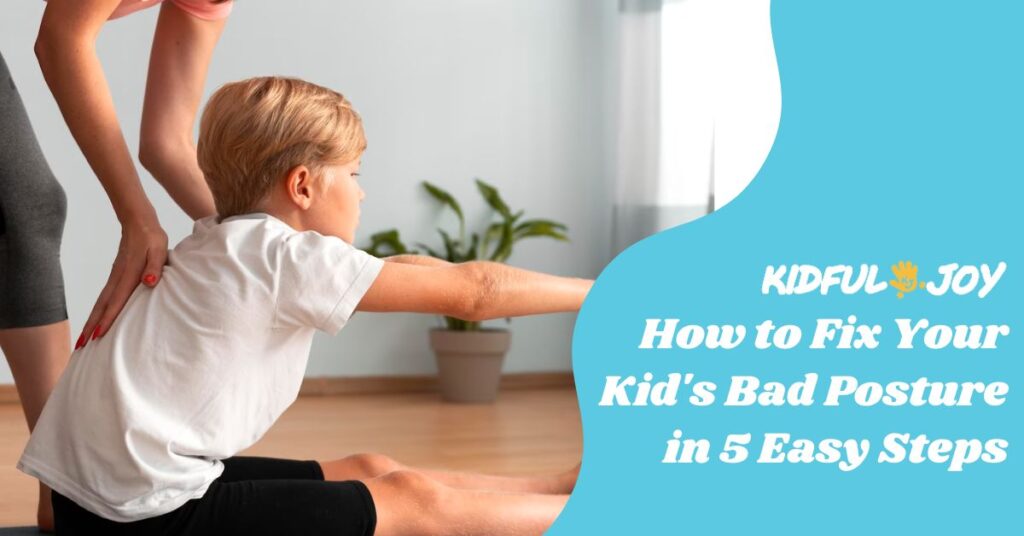
In today’s digital age, children are spending more time than ever before sitting in front of screens, leading to a rise in poor posture and related health issues. Bad posture not only affects children’s physical health, but it can also impact their mood, confidence, and overall well-being. As parents, it’s important to help our children develop good posture habits that will benefit them throughout their lives.
Fortunately, with some simple steps, parents can help their kids straighten up and develop good posture habits that will benefit them throughout their lives. In this article, we’ll discuss five easy steps to fix your kid’s bad posture.
Why is good posture important for kids?
Maintaining good posture is essential for people of all ages, especially for children who are still growing and developing. Good posture helps to ensure proper alignment of the spine and joints, which can prevent a myriad of health problems in the future.
One of the most significant benefits of good posture is that it reduces the risk of developing back and neck pain. Poor posture can put undue stress on the spine and cause muscular imbalances, leading to discomfort and pain. Children who develop good posture habits early on can avoid these issues and maintain a healthy, pain-free back and neck as they grow older.
Good posture also helps to improve overall physical performance. When children sit or stand with proper alignment, their muscles are in the best position to support movement and reduce the risk of injury. Good posture can also help with balance, coordination, and flexibility, which are important for playing sports, running, and engaging in other physical activities.
In addition to physical benefits, good posture can also have a positive impact on mental health. Research has shown that good posture can help to boost confidence, reduce stress levels, and improve mood. Children who maintain good posture are more likely to feel confident and self-assured, which can improve their academic and social performance.

Signs of bad posture in Children
As said poor posture can lead to a variety of physical and mental health problems, so it’s crucial to address any issues as soon as possible. Here are some common signs of bad posture in children:
- Rounded shoulders: If your child’s shoulders are hunched forward, it could be a sign of poor posture. This position can put stress on the neck and back, leading to discomfort and pain.
- Forward head posture: When a child’s head is positioned in front of their shoulders, it can strain the neck and upper back muscles. This can cause headaches, neck pain, and even breathing difficulties.
- Slouching: Slouching while sitting or standing can put undue stress on the spine and lead to back pain. If your child frequently slouches, it’s important to address the issue and encourage them to sit or stand up straight.
- Uneven shoulders or hips: If your child’s shoulders or hips are uneven, it could be a sign of scoliosis or another spinal condition. This can cause discomfort and pain, so it’s important to have your child evaluated by a healthcare professional.
- Fatigue: Poor posture can cause muscles to work harder than they need to, leading to fatigue and discomfort. If your child complains of feeling tired or achy, it could be a sign of bad posture.
The negative effects of bad posture on children’s health
Bad posture can have a variety of negative effects on children’s health. These effects can be both physical and mental and may impact a child’s overall well-being. Here are some of the most common negative effects of bad posture on children’s health
- Increased risk of back pain: Poor posture can put undue stress on the spine and lead to back pain. This pain can be chronic and may impact a child’s ability to participate in physical activities or even complete everyday tasks.
- Reduced flexibility and mobility: Bad posture can cause muscles and joints to become stiff and inflexible, which can reduce a child’s mobility and range of motion. This can impact their ability to play sports or engage in physical activity, which can have negative effects on their overall health.
- Breathing difficulties: When a child’s posture is poor, it can cause their chest to become compressed, leading to breathing difficulties. This can impact their ability to participate in physical activity and can even lead to fatigue and other health problems.
- Increased risk of injury: Poor posture can put a child at increased risk of injury, especially if they are participating in physical activity. When the body is not properly aligned, it can put undue stress on muscles and joints, leading to strains, sprains, and other injuries.
- Negative impact on mental health: Bad posture can impact a child’s confidence and self-esteem, which can have negative effects on their mental health. Children who are constantly in pain or discomfort may also experience anxiety or depression.

How to fix your kid’s bad posture – 5 easy steps
Step 1: Educate your child about good posture
Teaching your child about good posture is an essential aspect of their overall health and well-being. To start, it’s important to emphasize the importance of good posture and how it can benefit them throughout their lives. By demonstrating good posture yourself and encouraging your child to do the same, you can set a positive example and promote healthy habits.
Using positive reinforcement is also an effective way to encourage good posture habits in children. Praising them when they are sitting or standing up straight can help them feel proud of their efforts and motivate them to continue practising good posture. Additionally, making learning about good posture fun and engaging can help children stay interested and motivated.
It’s also important to emphasize the many benefits of good posture, including reduced risk of pain and injury, improved physical performance, and increased confidence and self-esteem. By helping your child understand the positive impact that good posture can have on their overall health, they will be more likely to make it a priority in their daily lives.
Step 2: Adjust your child’s workspace and sleeping position
When children spend a significant amount of time sitting or lying down, it’s important to ensure that they are doing so in a way that supports proper alignment and reduces the risk of poor posture. This may include adjusting the height of their chair and desk to ensure that they can sit with their feet flat on the ground and their arms at a comfortable angle.
Additionally, it’s important to ensure that your child’s sleeping position supports good posture. A supportive mattress and pillow can help to ensure that your child’s spine and neck are properly aligned while they sleep. If your child tends to sleep in a certain position, such as on their stomach, it may be helpful to encourage them to try sleeping in a different position that is more supportive of good posture.
In addition to adjusting your child’s workspace and sleeping position, it’s important to encourage breaks and movement throughout the day. Encourage your child to take breaks from sitting or lying down and engage in physical activity or movement to promote healthy posture habits.

Step 3: Encourage physical activity and exercise
Encouraging physical activity and exercise is an essential aspect of promoting good posture in children. Regular exercise and movement can help to strengthen muscles and improve flexibility, which can in turn support proper alignment and reduce the risk of poor posture.
When children engage in physical activity, they are also more likely to develop good posture habits naturally. Activities such as running, swimming, and playing sports can help to strengthen the core muscles and improve overall posture.
It’s important to encourage a variety of physical activities and exercise to promote overall physical health and support good posture. Activities such as yoga and Pilates can be particularly useful for building core strength and improving flexibility, which can support good posture habits.
In addition to promoting good posture, regular exercise and physical activity can also have a variety of other health benefits for children. It can help to support healthy growth and development, improve cardiovascular health, and promote healthy weight management.
Encouraging physical activity and exercise doesn’t have to be complicated or time-consuming. Simple activities such as taking a walk, riding a bike, or playing catch with a ball can all help to promote movement and support good posture.
Step 4: Strengthen your child’s core muscles
Strengthening your child’s core muscles is another important step in promoting good posture. The core muscles, which include the muscles of the abdomen, back, and pelvis, are essential for supporting the spine and maintaining proper alignment.
There are many exercises that can help to strengthen your child’s core muscles and support good posture. Planks, sit-ups, and back extensions are all effective exercises that can help to build core strength and improve posture.
It’s important to ensure that your child is performing these exercises with proper form to avoid injury and maximize the benefits. Consider working with a qualified physical therapist or personal trainer to help your child develop a safe and effective exercise program.
In addition to formal exercise, there are many everyday activities that can help to strengthen your child’s core muscles and promote good posture. Encourage your child to engage in activities that require core strength, such as climbing, swimming, and playing sports.
Strengthening your child’s core muscles can have many other benefits beyond promoting good posture. It can help to improve overall physical performance, reduce the risk of injury, and support healthy growth and development.

Step 5: Make posture correction a habit
It’s important to be patient and persistent when working on posture correction. Habits take time to develop, so encourage your child to keep practicing and remind them of the many benefits of good posture.
As your child develops good posture habits, it’s important to continue reinforcing and encouraging these behaviors. Over time, good posture will become second nature, and your child will be more likely to maintain healthy posture habits as they grow and develop.
Additional tips for improving your child’s posture
One important tip is to set a good example by modeling good posture habits yourself. Children are more likely to adopt healthy habits if they see their parents doing the same.
Checking your child’s backpack is another important step in promoting good posture. Heavy backpacks can put undue stress on the spine and lead to poor posture. Make sure your child’s backpack is properly fitted and not too heavy.
Ergonomic furniture, such as chairs and desks, can also help to promote good posture and reduce the risk of pain and injury. Consider investing in these types of furniture for your child’s workspace to support healthy posture habits.
If your child is experiencing pain or discomfort related to poor posture, it’s important to seek medical attention. A healthcare professional can provide guidance and treatment to help your child manage their symptoms.
Improving your child’s posture requires a multifaceted approach that takes into account their daily habits and environment.
When to seek professional help for posture correction

While many cases of poor posture can be corrected through lifestyle changes and healthy habits, there are some cases where professional help may be necessary. Here are some signs that it may be time to seek professional help for posture correction:
- Persistent pain or discomfort: If your child is experiencing persistent pain or discomfort related to poor posture, it’s important to seek medical attention. A healthcare professional can evaluate their condition and provide guidance on how to manage their symptoms.
- Scoliosis or other spinal conditions: Scoliosis and other spinal conditions can cause poor posture and may require more specialized treatment. A healthcare professional can provide guidance on how to manage these conditions and promote healthy posture habits.
- Developmental delays: Children with developmental delays may require more specialized treatment to promote healthy posture habits. A healthcare professional can provide guidance on how to support their development and promote good posture.
- Limited mobility: If your child has limited mobility due to a medical condition or injury, it may be necessary to seek specialized treatment to promote healthy posture habits.
- Lack of improvement with lifestyle changes: If your child has been practising healthy posture habits but has not seen improvement in their posture or symptoms, it may be time to seek professional help. A healthcare professional can evaluate their condition and provide additional guidance on how to promote healthy posture habits.
If you are concerned about your child’s posture or they are experiencing persistent pain or discomfort related to poor posture, it’s important to seek professional help. A healthcare professional can provide guidance and treatment to help your child manage their symptoms and promote healthy posture habits.
Conclusion
In conclusion, promoting good posture in children is an essential aspect of their overall health and well-being. Poor posture can have a variety of negative effects on physical and mental health, including increased risk of back pain, reduced flexibility and mobility, breathing difficulties, increased risk of injury, and negative impact on mental health.
However, by educating children about good posture, encouraging physical activity and exercise, adjusting their workspace and sleeping position, strengthening their core muscles, making posture correction a habit, and seeking professional help when necessary, parents and caregivers can help children develop healthy posture habits that will benefit them throughout their lives.
Promoting good posture requires ongoing effort and attention, but it can have many positive benefits beyond reducing the risk of pain and injury. Good posture can improve physical performance, support healthy growth and development, and increase confidence and self-esteem. By prioritizing good posture and incorporating these tips and strategies into daily life, parents and caregivers can help children develop healthy habits that will benefit them both now and in the future.